The shopping experience that actually remembers you.
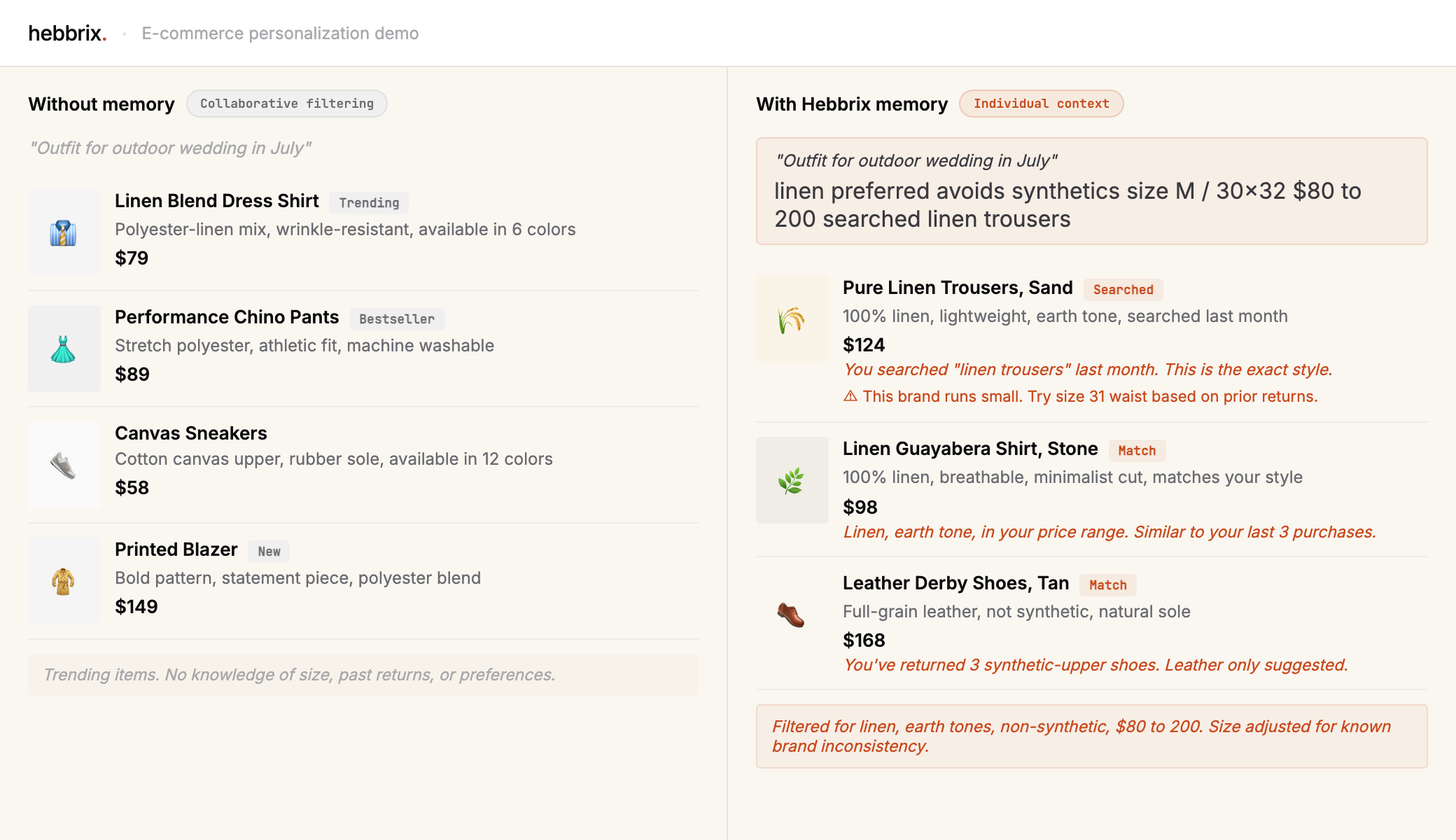
Recommendation engines know what people like you bought. Hebbrix memory knows what this specific customer likes, what they've returned, what they asked about last month, and what they're likely looking for today. That's a different class of personalization.
What your shopping agent knows before the first question
Built from this person's purchase history, returns, browsing, and conversations, not from collaborative filtering. It's individual, not statistical.
Shopping assistant conversation
"Looking for something to wear to an outdoor wedding in July"
Based on what you like, I'd suggest our linen blend trousers in sand (you searched for those last month, and this is the exact style). The cut runs slightly small so I'd go with a 31 waist given your usual size. Want me to show you the full outfit suggestion in your price range?
Used: style preferences, prior search, size history, return pattern, price range. Suggested a size adjustment based on known brand sizing issue.
The difference between a recommendation and a suggestion
More than purchase history. What they returned, what they browsed but didn't buy, and what they said outright that they liked.
Why items came back, whether sizing, quality, or color. The agent uses this to recommend more confidently and to flag the risky items up front.
Gift buying season, work wardrobe refresh, special events. Context that explains the what and when of shopping behavior.
Questions asked, advice given, items mentioned but not purchased. Nothing is forgotten between sessions.
Real price ceiling inferred from behavior, not just stated preferences. Stops recommending items they always skip.
Confirmed sizing by brand, including the brands that run small or large. Adjusts recommendations on its own, so the customer doesn't have to remember.
Shopping agents that know the individual
Free tier, no credit card. Build a personalized shopping experience that actually improves with every session.